1

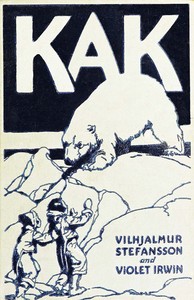
Kak, the Copper Eskimo — Inside the Classic
(9 User reviews)
1741
Project Gutenberg
2022
Not confirmed
Arctic regions -- Juvenile fiction; Copper Inuit boys -- Juvenile fiction; Victoria Island (Nunavut and N.W.T.) -- Juvenile fiction
Readers of public-domain and historical texts
Project Gutenberg digital edition
en
Edition facts
Words
56,454
Reading time
246 min
Text sections
17
Kak, the Copper Eskimo — Inside the Classic can be approached with a clearer sense of reading commitment from its source measurements: 56,454 words, 4 hr 6 min estimated reading time, and 17 detected text sections.
The text analysis averages about 17.0 words per sentence, while the detected sections provide another way to judge how the source is divided.
Project Gutenberg metadata also associates the work with “Arctic regions -- Juvenile fiction,” connecting these edition facts with the source record’s subject description.
Source:
Project Gutenberg record #67630
An editorial note on the language, narrative voice, and pacing in Kak, the Copper Eskimo, highlighting the use of colloquial asides, shifting sentence rhythms, and cultural explanations that blend adventure with ethnographic detail.
Editorial Edition Score
4.8/5
★★★★★
★★★★★
Calculated from edition completeness, EPUB availability, text structure and catalogue metadata. Not a user rating.
How this score is calculated
- Description quality20 pts
- Title & short description10 pts
- Source metadata20 pts
- Text length15 pts
- Chapters / structure15 pts
- EPUB file integrity20 pts
Total of 100 points, scaled to a 2.5-5.0 range. Editions with an empty description or a missing EPUB file are not scored.
Edition quality
Read the Text
oy who lived in Victoria Island in Canada. He belonged to the Copper Eskimos. This name does not refer in any way to their complexions as “red Indians,” but is given because the people make all their knives and implements out of copper. As far as looks went Kak was quite ordinary--a short, muscular fellow, with brown hair and gray eyes, and a skin about the color of white boys’ skins at the end of the summer holidays when they are tanned. But his clothing was very different from ours, being made entirely of fur.
Kak was not counted a poor boy though he possessed very little. Eskimos do not go in for possessions. They are a migratory people, always moving from place to place, and so learn to get on with a small amount of gear, as we do in camp life. Kak was contented and had no cares. He never had to make up his mind whether to play with his meccano, or his electric train, or his radio. He was entirely ignorant of such things and yet not a bit dull. He found plenty of sport up there in the Arctic to keep him merry and bright. First of all his parents owned so little they were never worried about taking care of things; with nothing to do but kill a few animals for food and fuel and clothes they were as gay as children, always laughing and joking from morning to night. The boy could scarcely remember a day that was not full of fun and laughter.
In the winter they lived in a snow house. You would think it must be cold inside a snow house but it was not, because their large lamp burned in the house all the time and kept it cozy and warm; so warm that Kak usually skinned off his coat and shirt as soon as he came indoors. He did not come in often during the daylight, for he enjoyed the cold outside, and he was a singularly independent lad, doing just what he pleased. That is the Eskimo boys’ compensation for not having toys: they are allowed to do as they like. In the morning Kak did not get up till he wanted to. He did not have to wash his neck, nor mind his table manners, nor go to school; and he was never, never sent to bed. You see as there was only one room in the whole house the family had to be jolly all together all the time. In the evenings when the grown-up folks sat around telling stories and singing songs, Kak stayed with them, and so did his little sister, Noashak. They sat up as long as they possibly could, and when the sandman came and shut their eyes in spite of them, they toppled over asleep wherever they were, and somebody tucked them in between fur blankets.
Kak, whose name means the top of anything or summit, as of a mountain, was twelve years old when he built his first house by himself. It was a horrible experience which he will remember all his life.
The way to build a snow house is to cut big blocks the shape of dominoes out of a hard snowdrift and set them up on edge in a circle, leaning them inward a little toward the center. You must carve the first block diagonally in half so that its back makes a hill for the second row to run up on; and when you have started properly you can keep on building one row above the next, going up and around like the red and white on a barber pole, and always leaning them inward till they just naturally meet at the top, where you sometimes poke a very small hole for ventilation. The finished dwelling is a beehive of snow--awfully cold snow which has frozen together safe and solid in a surprisingly short time. Next you dig a long tunnel through the drift and a hole in the floor of the house, and that is the way you go in and out, like rabbits and foxes burrowing to their dens.
From its opening sentence, Kak, the Copper Eskimo establishes a narrative voice that moves between direct explanation and colloquial aside. The first chapter explains that the Copper Eskimos are named for their copper implements, not their skin color, and describes Kak as having skin “about the color of white boys’ skins at the end of the summer holidays.” This dual register—part ethnographic primer, part familiar address—persists throughout the excerpts. The narrator frequently breaks into second-person comments (“You would have whistled your dog off, but Eskimos cannot whistle”) and uses contractions and interjections (“Never before was such a tumult!”). These shifts create a voice that is both instructive and intimate, guiding a young reader through unfamiliar terrain while maintaining a conversational tone.
Colloquial Asides and Direct Address
The narrative frequently steps out of the story to speak directly to the reader. When describing the dogfight, the narrator notes: “You would have whistled your dog off, but Eskimos cannot whistle. It is an unknown art up north.” This aside does more than explain a cultural fact; it momentarily aligns the reader with the narrator’s own world, then gently corrects that assumption. Similar moments occur throughout the excerpts: “Eskimo dogs are the worst watch dogs in the world: no good at all on the job.” The tone is matter-of-fact, even wry, and it treats the reader as a companion rather than a passive observer. These asides also serve to pace the action, inserting a pause for reflection or humor just when the scene becomes most chaotic.
Shifts in Sentence Rhythm and Pace
The prose rhythm varies markedly between descriptive passages and action sequences. In quieter moments, sentences are longer and more explanatory: “Kak was not counted a poor boy though he possessed very little. Eskimos do not go in for possessions.” During the dogfight, however, the syntax fractures into short, staccato clauses: “Dogs leaped from their dreams. Dogs whirled in on every side. They barked now and bit, too. They rushed at each other and snarled and snapped and pawed and nipped.” The repetition of “Dogs” at the start of successive sentences, combined with the rapid list of verbs, mimics the sudden, chaotic energy of the brawl. This contrast between measured exposition and breathless action is a deliberate structural tool, keeping the reader alert to changes in mood and event.
Cultural Explanation Embedded in Action
The narrative often embeds ethnographic details within scenes of movement or conflict, so that information arrives as part of the story rather than as a pause. When the visitors arrive at the village, the description of the dogs’ friendliness (“they came out wagging their tails and making all sorts of friendly advances; not giving so much as one little ‘wow’ of warning”) simultaneously advances the plot and teaches the reader about Eskimo dog behavior. Similarly, the children’s reaction to the fight—“The more Puckish urged on the fight with: ‘Go it, Scruffy!’”—reveals that Eskimo children, like any others, enjoy a spectacle. This technique keeps the pace lively while still fulfilling the book’s implicit educational purpose. The reader learns about copper tools, migratory life, and social customs without ever feeling lectured.
Readers attentive to voice will notice how the narrator’s tone subtly shifts between chapters: the opening is more explanatory, while later excerpts lean into dramatic action and dialogue. The collaborative authorship—Stefansson, an Arctic explorer, and Irwin, a children’s writer—may account for this blend of firsthand knowledge and storytelling craft. Pay attention to how the narrative handles moments of danger or surprise; the pacing often accelerates through short sentences and exclamations, then slows for a clarifying aside. This rhythm is the book’s most distinctive feature, and it rewards a close reading of how language shapes the reader’s experience of the Arctic world.
That rainy afternoon, Kak, the Copper Eskimo kept drifting into quiet asides about sled dogs and seal blubber, and I found myself missing the simpler, more mischievous tone of old girls’ adventures. Later, half-dozing, I remembered Mill’s creaky wheel and the mysterious flour sacks. Somehow that led me to The Camp Fire Girls; Or, The Secret of an Old Mill — Story, Setting & Ideas, a gentler sort of mystery altogether.
Alexander Carter
1 month agoWilliam Wilson
3 weeks agoDylan Ramirez
4 weeks agoTheodore Perez
1 month agoThere are no comments for this eBook.
Reader reflection
Before you leave, reflect on the book
Use these questions to collect your thoughts before moving on.
Your progress
0
/
10
2
How much did you enjoy the reading experience?
3
How likely are you to recommend this book?
4
How demanding did the text feel?
5
How clearly were the main ideas presented?
6
Which element worked best for you?
7
Did it raise ideas you would like to talk about?
8
Would you read this book again?
9
What changed or sharpened your thinking?
10
Grace Hernandez
4 weeks ago