1

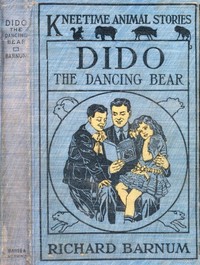
Dido, the Dancing Bear: His Many Adventures — Inside the Classic
(10 User reviews)
2803
Project Gutenberg
2020
Not confirmed
Animals -- Juvenile fiction; Conduct of life -- Juvenile fiction; Bears -- Juvenile fiction; Circus -- Juvenile fiction
Readers of public-domain and historical texts
Project Gutenberg digital edition
en
Edition facts
Words
28,233
Reading time
123 min
Text sections
13
The catalog record for Dido, the Dancing Bear: His Many Adventures — Inside the Classic provides practical reading context through 28,233 words, 2 hr 3 min estimated reading time, and 13 detected text sections.
The text analysis averages about 15.0 words per sentence, while the detected sections provide another way to judge how the source is divided.
Project Gutenberg metadata also associates the work with “Animals -- Juvenile fiction,” connecting these edition facts with the source record’s subject description.
Source:
Project Gutenberg record #61450
This editorial note examines the narrative voice and pacing in Richard Barnum's Dido, the Dancing Bear, focusing on the direct address to child readers, the use of explanatory asides, and the rhythm of action sequences.
Editorial Edition Score
4.7/5
★★★★★
★★★★★
Calculated from edition completeness, EPUB availability, text structure and catalogue metadata. Not a user rating.
How this score is calculated
- Description quality20 pts
- Title & short description10 pts
- Source metadata20 pts
- Text length15 pts
- Chapters / structure15 pts
- EPUB file integrity20 pts
Total of 100 points, scaled to a 2.5-5.0 range. Editions with an empty description or a missing EPUB file are not scored.
Edition quality
Read the Text
ough the blazing hoop to get the apple _Frontispiece_
But Dido climbed up a tree to get away 23
Into the tub of water he jumped with a splash 43
Dido, the dancing bear and Tum Tum, the jolly elephant 65
Just as the dog was going to jump Dido stepped in between them 81
Jacko and Dido were eating cakes from the window 95
He soon had opened the cage of the dancing bear and Dido jumped out 117
DIDO, THE DANCING BEAR
In the woods, on top of a mountain, in a far-off country there once lived a family of nice bears. I call them nice bears for they were. Of course they had long claws, and sharp teeth, but they never bit any one, or scratched any one, because there were no boys or girls, or men or women, living in that part of the woods.
I suppose, though, if a boy went on top of the mountain, and began throwing stones or sticks at the nice bears, they might have run out and scratched him to make him go away. Mind, I’m not saying for sure, but maybe. But, as I have said, there were no boys in the woods to bother the bears who lived all by themselves in a den among the rocks.
A bear’s house is called a den, because it is such a nice, cozy, warm place, just as your father or brother may have a room of his own, all fixed up with the things he likes best, and he calls that his den.
Well, in this den in the woods on top of the mountain lived the five bears. There was Mr. Bear, the papa, and Mrs. Bear, the mother, and there were three little bears, called cubs, just as little dogs are called puppies.
One little bear was named Gruffo, because he had such a deep, gruff voice, though it was not at all cross. And another bear was named Muffo, because he had such big, soft furry paws that when he folded them together it looked just as if he were carrying a muff.
And besides Gruffo and Muffo there was another bear, the smallest of the three, called Dido. Now I am going to tell you some of the many adventures Dido had. Adventures, you know, are what happen to you.
“Gruffo and Muffo, you must take good care of your little brother Dido when you go off playing in the woods,” said Mrs. Bear, for though the bears could not speak in our language they had talk of their own which was just as plain to them as our A B and C talk is to us.
“Take good care of Dido,” Mrs. Bear would say. “Don’t run away from him, or he might be lost. And don’t climb big trees and leave him on the ground, or something might happen to him. And never take him too far out in the water of the lake when you go swimming, or he might be drowned.”
“We won’t, Mother,” said Gruffo and Muffo. “We’ll take good care of Dido.”
“Oh, I guess I can take care of myself,” said Dido, making a funny face with his queer, black, rubbery nose.
“Now that wasn’t a nice thing to say,” said Mrs. Bear, holding up her paw and gently shaking it at Dido. “You ought to be glad your bigger brothers will look after you.”
“Oh, so I am, Mother,” answered Dido. “I’m sorry I spoke that way. May they take me swimming now, down to the lake?”
“I guess so,” answered Mrs. Bear. “Run along, little cubs. I have to go out and see if I can find some berries or sweet roots for your dinner.”
Bears, you know, like to eat berries and the sweet roots of some trees and bushes. Bears also like fish, and honey. Say! if ever you have a pet bear, which might some day happen, you know, and you want to give him a special extra treat, just bring him some honey. He will love it so much that he will eat every bit of it up, box and all!
So while Dido, with his brothers Gruffo and Muffo, walked on along the mountain path to the lake, Mrs. Bear went off in the woods to find some roots and berries for dinner. Of course the little bears might have been able to find some for themselves, but you know how it is with children. Even though they know where the things are to eat they like their mother to get a meal for them.
From its first sentence, Dido, the Dancing Bear establishes a narrator who speaks directly to a child audience. The opening chapter begins with a conditional aside—“Mind, I’m not saying for sure, but maybe”—that invites readers into a speculative, conversational space. This technique recurs throughout the excerpts: the narrator explains what a bear’s den is by comparing it to a father’s or brother’s room, and later clarifies that animals can understand but cannot answer back. These interjections slow the narrative pace, creating pauses for explanation that are characteristic of early twentieth-century children’s literature.
Conversational Asides and Narrative Rhythm
The narrator frequently breaks from action to address the reader directly or to clarify a point. For instance, after describing the bear family, the text adds: “I suppose, though, if a boy went on top of the mountain, and began throwing stones or sticks at the nice bears, they might have run out and scratched him to make him go away.” This hypothetical scenario is not necessary for plot advancement; it serves to manage reader expectations and to model appropriate behavior. Such asides create a rhythm of statement and qualification, giving the prose a measured, pedagogical quality. The effect is a narrative that feels less like a fast-paced adventure and more like a guided tour, with the narrator acting as a patient explainer.
Pacing in Performance Sequences
When Dido performs tricks, the prose shifts to a more rapid, step-by-step description. The somersault trick is rendered in a series of short actions: “Dido leaned down, put his head on the ground, kicked his hind legs up in the air, and over he went.” The repetition of “over he went” and the command “Another, Dido!” accelerate the tempo, mimicking the briskness of a live performance. Similarly, the tree-climbing trick is broken into discrete stages: climbing, stopping, descending, and receiving a reward. These sequences contrast with the earlier explanatory passages, demonstrating Barnum’s ability to vary pace according to content. The performance scenes also include audience reactions—laughter, tossed pennies—that further quicken the narrative beat.
Voice and the Illusion of Animal Speech
A notable feature of the narrative voice is its handling of animal communication. The narrator explicitly states that Dido cannot speak, yet the text includes dialogue attributed to the bear: “Don’t be afraid of me, doggies. I won’t hurt any one.” This contradiction is managed by framing the speech as a kind of interior monologue or as part of the trainer’s pretense. When George pretends to whisper in Dido’s ear and then listens for an answer, the narrator explains the ruse, preserving the boundary between reality and performance. The effect is a layered voice: one that acknowledges the fictionality of talking animals while still indulging in it. This self-aware narration adds a subtle complexity to the otherwise straightforward prose.
Readers attentive to narrative craft will notice how Barnum balances instruction with entertainment. The frequent asides and explanations may slow the story for modern tastes, but they also reveal a deliberate strategy to engage and educate a young audience. The performance sequences, by contrast, offer brisk, vivid action. Observing these shifts in pace and voice can enrich one’s reading of this early animal adventure.
Reading about Dido’s patient pacing, I remembered sitting with my grandfather, his voice slowing on the explanatory asides. That same unhurried trust in a young listener came back with Bob Hazard, dam builder — Reading Companion; it felt less like a story being told than a quiet conversation being kept between pages. A familiar warmth, simply waiting there again.
Grayson Green
1 month agoAnthony Thomas
3 weeks agoIsabella Scott
1 month agoNoah Wilson
1 month agoThere are no comments for this eBook.
Reader reflection
Record your reading impressions
A brief reflection can help important ideas stay with you longer.
Your progress
0
/
10
2
How much did you enjoy the reading experience?
3
Is this a title you would suggest to others?
4
What was the reading difficulty like?
5
How much did the book move you?
6
Is this a title worth rereading?
7
How clear did the writing feel?
8
Would this book work well in a reading group?
9
What changed or sharpened your thinking?
10






Sebastian Lopez
3 weeks ago