1

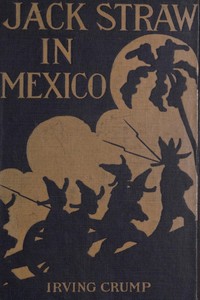
Jack Straw in Mexico: How the Engineers Defended the Great Hydro-Electric Plant — Context and Discussion
(6 User reviews)
950
Project Gutenberg
2019
Not confirmed
Adventure stories; Mexico -- History -- Revolution, 1910-1920 -- Juvenile fiction; Dams -- Juvenile fiction; Americans -- Mexico -- Juvenile fiction
Readers of public-domain and historical texts
Project Gutenberg digital edition
en
Edition facts
Words
44,565
Reading time
194 min
Text sections
5
The catalog record for Jack Straw in Mexico: How the Engineers Defended the Great Hydro-Electric Plant — Context and Discussion provides practical reading context through 44,565 words, 3 hr 14 min estimated reading time, and 5 detected text sections.
The text analysis averages about 18.4 words per sentence, while the detected sections provide another way to judge how the source is divided.
Project Gutenberg metadata also associates the work with “Adventure stories,” connecting these edition facts with the source record’s subject description.
Source:
Project Gutenberg record #60941
Jack Straw, a Vermont schoolboy, travels to Mexico during the Revolution to help American engineers defend a hydro-electric dam. The narrative moves between tense standoffs, technical problem-solving, and river-crossing scenes, with recurring images of alligators, pack trains, and improvised defenses.
Editorial Edition Score
4.7/5
★★★★★
★★★★★
Calculated from edition completeness, EPUB availability, text structure and catalogue metadata. Not a user rating.
How this score is calculated
- Description quality20 pts
- Title & short description10 pts
- Source metadata20 pts
- Text length15 pts
- Chapters / structure15 pts
- EPUB file integrity20 pts
Total of 100 points, scaled to a 2.5-5.0 range. Editions with an empty description or a missing EPUB file are not scored.
Edition quality
Read the Text
ingle reason why he should expect to face a scolding from Dr. Moorland. Every examination paper had come back with excellent markings and his conduct for some time past had been beyond reproach. He thumped the old door knocker twice in his eagerness to find out just what the master wanted. Perhaps it was news from home, he thought, and he comforted himself by the fact that nothing serious had happened to his father, for the letter in his coat pocket attested to the fact that he was still well enough to write. But while he was speculating thus the door was opened by Dr. Moorland himself.
The dignified pedagogue greeted the boy with a broad smile and a hearty hand shake.
“I didn’t know but what you and some of the rest of the boys had about grieved yourselves to death over your ill luck at having the championship game broken up by the weather,” he said as he ushered Jack into his study in a secluded wing of the house.
“It is rather hard on us,” said Jack with a smile. “Here we’ve been working since February to get our team in shape for the trophy contest and then a little thing like the weather spoils it. Next year I think we will have to arrange to have the championship game a little earlier so there will be enough time to play it in case of an emergency like this one.”
“Never mind, Jack, my boy,” said the principal, “I have a mission for you that is calculated to take your mind off baseball and similar troubles for some time to come.”
The boy was plainly puzzled at this remark. He looked curiously at the principal who was striding the room nervously. Dr. Moorland was a tall, broad shouldered man of sixty. His hair was snow white and so long in back that it curled down over his coat collar. A pair of horn rimmed spectacles that were constantly sliding forward on his nose made him appear to be a testy individual, but in reality he was a genial old gentleman who loved his boys as much as if he was the father of every one of them. The State of Vermont counted him among the best of its educators and he was famed throughout the country, indeed throughout the world as a chemist.
“Jack,” he said after a long silence, “how would you like to go to Mexico?”
“To Mexico!” gasped Jack.
“Yes, to Mexico. It will be an opportunity for you to see a wonderful country and also to make enough money to pay your tuition at Drueryville next year. Do you care to go?”
“Why—why—Oh, I’d be delighted—but—well I’d have to get father’s consent first, you know.”
“Ah, Jack, you don’t suppose I would have suggested the subject before consulting your father about it, do you? I wrote him several days ago and asked his permission to let you go. I received word this morning that he was perfectly willing to have you avail yourself of the chance to see a little of the world providing you cared to go. I wonder that he hasn’t written to you about it.”
“Why, perhaps the letter I have in my pocket now is about that very thing,” said Jack, searching in his pocket for the envelope.
“Very likely,” said the principal, “but you can read it after. Let me explain exactly what I want you to do. When you have heard the details you can decide better whether you want to go.”
Dr. Moorland had ceased pacing the room and settled deep in his comfortable study chair. With what seemed exasperating deliberateness to Jack, he removed his huge glasses and polished them thoroughly on his handkerchief before he was ready to talk. Then just as he was about to begin he seemed to remember something else of importance, for he began to search drawer after drawer of his desk until he finally brought to light a large yellow envelope bulging with what appeared to be blueprints. He tossed the package on the desk before him and once again resumed his comfortable attitude.
The story opens not in Mexico but in a rain-soaked Vermont dormitory, where five members of the “D” club mope over a canceled baseball championship. This domestic disappointment gives way to a mission that will drop Jack Straw into the Mexican Revolution, where he must help American engineers protect a hydro-electric plant. The shift from schoolboy frustration to armed vigilance is abrupt, and the narrative carries that tension forward.
Irving Crump structures the adventure as a series of physical and strategic challenges: crossing rivers infested with alligators, outwitting customs inspectors, and reinforcing a weakened garrison. The excerpts show a pattern of movement—from campus to ship, from customs house to secret service interrogation, and finally to the dam itself—each scene introducing a new obstacle that tests Jack’s resourcefulness.
From Campus to Conflict Zone
The opening chapter establishes a rhythm that repeats throughout: a quiet, almost mundane setting is disrupted by a sudden call to action. In the dormitory, the rain that cancels the baseball game is a minor disappointment; but the same weather system, or its equivalent, will later become a tactical factor at the dam. Jack’s transition from student to operative is handled through a series of threshold crossings—boarding a ship, facing customs inspectors, and being taken for a spy. Each crossing escalates the stakes.
The structure relies on these abrupt scene shifts. The reader is never given time to settle; just as Jack adapts to one environment, he is thrust into another. This keeps the narrative pace high and mirrors the unpredictability of revolutionary Mexico. The excerpts show that the authors use physical movement—from room to ship, from ship to train, from train to river—as the primary engine of plot advancement.
Alligators and Engineers: Recurring Images
One of the most striking recurring images is the alligator. In the excerpt, Jack encounters alligators while crossing a river with engineer Mr. Ryder. The reptiles are described with precise detail: “scaly backs and heads,” “fully ten feet long,” and a “death struggle” after Jack shoots one. The alligator serves multiple functions: it is a genuine threat, a test of Jack’s marksmanship, and a symbol of the untamed environment the engineers must control.
But the alligator is not merely decorative. It appears in a scene that also includes a native messenger, a pack train, and a ford—elements that together establish the setting as both exotic and dangerous. The engineers’ work is contrasted with this wildness: they build dams, string wires, and improvise searchlights. The recurring image of the alligator, then, underscores the tension between human engineering and natural chaos.
The River as a Stage for Action
The river crossing scene is the most fully developed in the excerpts, and it reveals how the authors use geography to structure conflict. The ford is a liminal space: it connects two banks, but it also exposes characters to danger. The native messenger wades across after scaring away alligators, but his dog is attacked. Jack’s quick shooting saves the dog, earning the gratitude of the messenger—a moment that will likely pay off later in the story.
This scene is typical of the book’s method: a simple act of crossing becomes a set piece. The river is not just a backdrop; it is an active element that forces characters to react. The engineers’ work at the dam involves controlling water, but here water is uncontrolled. The contrast between the tame river at the village and the wild river at the dam is a structural motif that the excerpts hint at but do not fully develop.
Improvisation Under Pressure
The book’s subtitle promises a defense of a “Great Hydro-Electric Plant,” and the excerpts show that the engineers rely on ingenuity rather than brute force. Jack’s revolver is used not only against alligators but presumably against human threats. The chapter titles hint at improvised searchlights, crippled generators, and a weakened garrison—all problems that require technical and tactical solutions.
The narrative structure favors scenes of problem-solving over extended combat. Jack and the engineers must repair machinery, set traps, and maintain communication lines. This emphasis on engineering under fire gives the book a distinctive texture: it is an adventure story that respects the practical details of keeping a power plant running. The excerpts do not reveal the outcome, but they establish a pattern of resourcefulness in the face of breakdown.
Readers should pay attention to the way the story moves between quiet moments of observation—like the description of the alligators sunning themselves—and sudden bursts of action. The authors use these contrasts to build suspense without relying on constant violence. The book rewards attention to the physical details of the setting: the ford, the pack trains, the generators. These are not just background; they are the materials out of which the adventure is built.
There’s something about the engineers’ stubborn, methodical work in Jack Straw in Mexico — the way they hold the dam not with heroics but with patience and repair — that stayed with me. It reminded me of the quieter patience in Jim and Wally — Reading Notes, where small moments of fixing and waiting carry their own sort of weight. I keep thinking about both of them, the way one does with old friends.
Gabriel Rodriguez
3 weeks agoBenjamin Perez
3 weeks agoIsabella Sanchez
2 weeks agoMadison Rodriguez
1 month agoThere are no comments for this eBook.
Reader reflection
Before you leave, reflect on the book
Use these questions to collect your thoughts before moving on.
Your progress
0
/
10
2
How did the book work for you overall?
3
Would you encourage someone else to read it?
4
How demanding did the text feel?
5
How original did the book feel?
6
Which aspect of the book did you value most?
7
Was the book easy to understand?
8
Could you see yourself revisiting this book?
9
What changed or sharpened your thinking?
10



Aria Sanchez
3 weeks ago