About 263 minutes
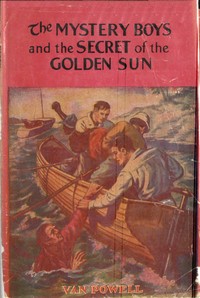
The Mystery Boys and the Secret of the Golden Sun — Inside the Classic
Childrens Adventures
60,324 recorded words. 5 minutes difference from this book's estimate.
View Gutenberg source #58420
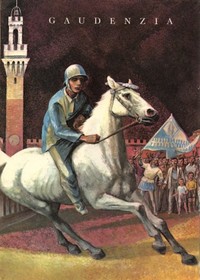
This digital edition of Gaudenzia, Pride of the Palio — Context and Discussion is described by source-level measurements including 59,239 words, 4 hr 18 min estimated reading time, and 8 detected text sections.
The text analysis averages about 12.7 words per sentence, while the detected sections provide another way to judge how the source is divided.
Project Gutenberg metadata also associates the work with “Palio di Siena (Festival) (Siena, Italy) -- Juvenile fiction,” connecting these edition facts with the source record’s subject description.
Explore this collection
These alternatives are selected using recorded categories and estimated reading time.
About 263 minutes
Childrens Adventures
60,324 recorded words. 5 minutes difference from this book's estimate.
View Gutenberg source #58420About 252 minutes
Childrens Adventures
57,741 recorded words. 6 minutes difference from this book's estimate.
View Gutenberg source #66091About 248 minutes
Childrens Adventures
56,822 recorded words. 10 minutes difference from this book's estimate.
View Gutenberg source #67642Search stored excerpts and compare books → Choose by your preferences →
Choices use stored catalog measurements. Estimates vary with reading speed. A shared category is a catalog label, not a claim that two books have the same argument or literary quality.
Search reads excerpt text stored with this catalog and links to its associated Gutenberg record. The connection is stored in the site database; this tool does not recheck that every excerpt is word-for-word identical to that external record. Excerpt search does not cover every chapter and does not verify historical publication dates.
Catalog snapshot checked: 2026-09-26. Coverage: 90 public books, 90 available source excerpts.
Calculated from edition completeness, EPUB availability, text structure and catalogue metadata. Not a user rating.
Total of 100 points, scaled to a 2.5-5.0 range. Editions with an empty description or a missing EPUB file are not scored.
Public-domain source text
The source text is kept in the dedicated reader, separate from this catalogue record and its commentary.
Marguerite Henry's foreword immediately signals a shift in narrative approach: she admits that her initial imagined plot—a fearless boy defying ancient rules—was discarded after witnessing the real Palio. Instead, the story that emerged follows Giorgio Terni and the mare Gaudenzia as "pawns of fate." This editorial note examines how Henry's language, narrative voice, and changes in pace reflect that shift from invention to observed reality.
The foreword is a rare moment where the author directly addresses her own process. Henry writes that she "had to scuttle my preconceived plot" after facing the real race. This confession sets up a tension between the fictional and the factual that runs through the book. The language here is direct and self-critical: "no rider, no matter how brave, would ever defy the ancient rules." The voice is that of a reporter correcting her own assumptions. This opening section establishes a documentary tone that contrasts with the more lyrical passages later, where Giorgio's emotions take over.
Henry gives Giorgio a distinct interior voice. When he first hears the mare's name, he "slowly tested it on his tongue." The act of speaking the name becomes a moment of happiness. Later, as he walks to Doctor Celli's villa, he whistles "about the common road to glory" and the notes come "so light and fast he could hardly keep up with them." These small details—the testing of a word, the speed of a whistle—reveal character through sensory action rather than exposition. The narrative pace quickens with Giorgio's excitement: he "half ran" up the hill, and the sentences shorten as he worries about the doctor being a late riser. The voice remains close to Giorgio's perspective, using free indirect discourse to convey his hopes and fears.
In Chapter XVIII, the pace slows dramatically when Giorgio enters the stable. The description is sparse: "the ribs showing, the mantle harsh." The stall smells "of cold earth and hay and dung." Henry uses short, clipped sentences to mirror Giorgio's stillness. The mare is "electric with curiosity," and Giorgio stands "motionless, making no sound." This pause contrasts with the earlier hurried walk. The scene builds tension through restraint—no dialogue, only observation. The narrative voice here is almost clinical, focusing on physical details. This shift in pace underscores the gravity of the moment: Giorgio is alone with the injured mare for the first time, and the story's emotional weight rests on this quiet encounter.
Henry's narrative voice moves fluidly between documentary precision and intimate character focus. Readers attentive to pacing will notice how the foreword's brisk confession gives way to Giorgio's measured, sensory world. The stable scene, in particular, rewards close reading for its deliberate rhythm and restrained language. These shifts are not arbitrary; they reflect the author's own journey from imagined plot to lived story.
Reading about Giorgio and Gaudenzia, I kept thinking how place itself becomes a kind of devotion. The same quiet pull I felt in Siena surfaces again in Vinzi: A Story of the Swiss Alps — Reading Companion, though the mountains hold it differently. Both books feel less like stories and more like remembered weather, lingering long after the page turns.
Create a short personal record of your experience with this book.