About 248 minutes
The Cruise of the Gyro-Car — A Closer Reading
Childrens Adventures
56,822 recorded words. 4 minutes difference from this book's estimate.
View Gutenberg source #67642
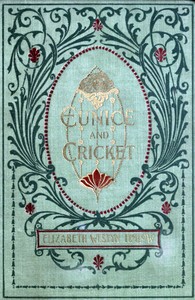
For Eunice and Cricket — Inside the Classic, the stored edition analysis reports 57,741 words, 4 hr 12 min estimated reading time, and 24 detected text sections.
The text analysis averages about 13.7 words per sentence, while the detected sections provide another way to judge how the source is divided.
Project Gutenberg metadata also associates the work with “Conduct of life -- Juvenile fiction,” connecting these edition facts with the source record’s subject description.
Explore this collection
These alternatives are selected using recorded categories and estimated reading time.
About 248 minutes
Childrens Adventures
56,822 recorded words. 4 minutes difference from this book's estimate.
View Gutenberg source #67642About 247 minutes
Childrens Adventures
56,602 recorded words. 5 minutes difference from this book's estimate.
View Gutenberg source #69037About 246 minutes
Childrens Adventures
56,454 recorded words. 6 minutes difference from this book's estimate.
View Gutenberg source #67630Search stored excerpts and compare books → Choose by your preferences →
Choices use stored catalog measurements. Estimates vary with reading speed. A shared category is a catalog label, not a claim that two books have the same argument or literary quality.
Search reads excerpt text stored with this catalog and links to its associated Gutenberg record. The connection is stored in the site database; this tool does not recheck that every excerpt is word-for-word identical to that external record. Excerpt search does not cover every chapter and does not verify historical publication dates.
Catalog snapshot checked: 2026-09-26. Coverage: 90 public books, 90 available source excerpts.
Calculated from edition completeness, EPUB availability, text structure and catalogue metadata. Not a user rating.
Total of 100 points, scaled to a 2.5-5.0 range. Editions with an empty description or a missing EPUB file are not scored.
Public-domain source text
The source text is kept in the dedicated reader, separate from this catalogue record and its commentary.
From the opening chapter, Timlow establishes a lively, colloquial voice through the girls' dialogue. Cricket's exclamation "It's going to be perfectly jolly" and Eunice's reading of camera instructions aloud set a tone of eager, hands-on learning. The children's mispronunciation—"Stand still as a mice"—is not corrected but repeated, signaling that the narrative aligns with their perspective rather than an adult's. This choice in diction makes the world feel child-centered, where rules are playfully adapted.
Timlow uses dialogue to distinguish the sisters without heavy exposition. Cricket is impulsive and enthusiastic, often clapping her hands and quoting slogans like "You push the button, and we'll do the rest." Eunice, the older sister, reads instructions and directs the scene with a calm authority. Even minor characters like Zaidie and Helen are sketched through their few lines: Zaidie's pinch and tickle of Johnnie-goat show a bossy streak. The author avoids tagging every line with adverbs; instead, the rhythm of speech—Cricket's exclamations, Eunice's measured commands—carries the characterization.
In the later excerpt, Timlow builds a scene of poverty through the girls' observations rather than authorial commentary. Cricket's inventory of Mrs. Brummagen's kitchen—"a teakettle and a saucepan," a frying pan, a tin pan—contrasts sharply with the "shining utensils" at home. The girls' surprise at the lack of a bread knife or tablecloth reveals their sheltered upbringing. Timlow lets the details speak: the "faded pink thing" on the table, the dull knife, the scorched bread. The description is filtered through the children's practical concerns—hunger and improvisation—making the setting feel immediate and unvarnished.
The cooking scene follows a clear problem-solution structure that mirrors the earlier photography episode. In both, the girls face a practical challenge (taking a photo, preparing a meal) and work through it step by step. Dialogue carries the action: "Can't you go around to the stable and take Johnnie-goat back?" and "I can't find any regular bread-knife." Timlow uses this pattern to show resourcefulness and collaboration. The failures—scorched bread, dull knives—are treated as humorous obstacles, not crises. This structural choice keeps the tone light while demonstrating the characters' growing competence.
Two motifs recur in the excerpts: the Kodak camera and the improvised meal. Both involve technology or domestic skills that the girls are learning to master. The camera is described with precise terms—"lever," "little round hole"—while the cooking requires adapting to limited tools. These motifs tie to the catalog subjects of "Conduct of life" and "Youth — Conduct of life": the girls are learning through doing. Timlow does not moralize; instead, she embeds lessons in the narrative's fabric. The goat, Johnnie-goat, appears in both scenes as a comic participant, linking the episodes and reinforcing the domestic, slightly chaotic atmosphere.
Readers attentive to Timlow's craft will notice how she builds character and setting through what the girls say and see, rather than through authorial summary. The excerpts suggest a narrative that trusts its young protagonists to drive the story. For those interested in late-nineteenth-century children's literature, the book offers a case study in how dialogue and descriptive detail can convey social class, family dynamics, and moral growth without overt instruction.
Reading about Eunice and Cricket’s careful diction, how their voices shaped every scene, I found myself quietly recalling another story’s heart. It was that same warmth between a girl and her father, the gentle way he let her stumble through her own ideas. That feeling lingers like old light, and I thought of Gloria: A Girl and Her Dad — A Closer Reading, a book that seemed to carry a similar hush.
A brief reflection can help important ideas stay with you longer.