About 191 minutes
The Boy Scouts' Victory — Context and Discussion
Childrens Adventures
43,836 recorded words. 1 minutes difference from this book's estimate.
View Gutenberg source #66921
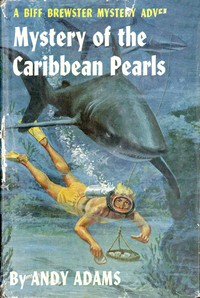
The source record for Mystery of the Caribbean Pearls — A Reader’s Guide measures this digital text at 43,494 words, 3 hr 10 min estimated reading time, and 7 detected text sections.
The text analysis averages about 10.5 words per sentence, while the detected sections provide another way to judge how the source is divided.
Project Gutenberg metadata also associates the work with “Mystery fiction,” connecting these edition facts with the source record’s subject description.
Explore this collection
These alternatives are selected using recorded categories and estimated reading time.
About 191 minutes
Childrens Adventures
43,836 recorded words. 1 minutes difference from this book's estimate.
View Gutenberg source #66921About 187 minutes
Childrens Adventures
42,781 recorded words. 3 minutes difference from this book's estimate.
View Gutenberg source #58628About 194 minutes
Childrens Adventures
44,394 recorded words. 4 minutes difference from this book's estimate.
View Gutenberg source #57466Search stored excerpts and compare books → Choose by your preferences →
Choices use stored catalog measurements. Estimates vary with reading speed. A shared category is a catalog label, not a claim that two books have the same argument or literary quality.
Search reads excerpt text stored with this catalog and links to its associated Gutenberg record. The connection is stored in the site database; this tool does not recheck that every excerpt is word-for-word identical to that external record. Excerpt search does not cover every chapter and does not verify historical publication dates.
Catalog snapshot checked: 2026-09-26. Coverage: 90 public books, 90 available source excerpts.
Calculated from edition completeness, EPUB availability, text structure and catalogue metadata. Not a user rating.
Total of 100 points, scaled to a 2.5-5.0 range. Editions with an empty description or a missing EPUB file are not scored.
Public-domain source text
The source text is kept in the dedicated reader, separate from this catalogue record and its commentary.
The opening chapter of Mystery of the Caribbean Pearls drops readers into a chabasco—a sudden, violent tropical storm—that washes a diver ashore on a tiny island in Treasure Bay, off Martinique. He clutches two perfectly matched black pearls, the fruit of weeks of diving. The catalog subjects list “Pearl divers -- Juvenile fiction” and “Netherlands Antilles -- Juvenile fiction,” but the excerpts quickly move beyond simple diving adventure. The diver’s fear of being watched by “unscrupulous” men sets up a plot driven by blackmail and coercion, not just treasure hunting.
The excerpts introduce Crunch, a large man who works for the antagonist Dietz. In a revealing conversation with protagonist Biff Brewster, Crunch explains he is blackmailed: Dietz threatens to report Crunch’s brother to the police for a past misdeed in Martinique. Crunch speaks in short, halting sentences—“Crunch have brother. Little brother. He do bad thing one time”—which contrasts with Biff’s fluent persuasion. This dynamic shifts the mystery from a simple pearl hunt to a story about leverage and loyalty. The catalog subject “Mystery fiction” fits, but the excerpts emphasize a personal hostage situation rather than a puzzle to be solved.
The narrative splits early: Biff is imprisoned in a cellhouse outside Willemstad, Curaçao, while his uncle Charlie Keene and friend Derek Zook secure a working permit in Martinique. The permit is delayed by a clerk Charlie suspects is in league with Dietz. Derek’s father is missing, last seen in La Trinité, and the packaged pearls he sent are a key clue. The catalog lists “Netherlands Antilles -- Juvenile fiction,” and the action does hop between Curaçao and Martinique, but the excerpts focus on bureaucratic obstruction and a father’s disappearance rather than island atmosphere. The permit scene shows how Dietz’s influence extends beyond physical threats into official channels.
The excerpts reveal a brisk, episodic structure. Chapter titles like “Discovery!,” “Seeing Double,” and “Backfire” promise rapid developments. Dialogue drives the plot: Biff’s persuasive speech contrasts with Crunch’s broken English, and Charlie Keene’s terse commands (“Come on, don’t let them see us”) maintain urgency. The prose is direct, with little description beyond action. The storm opening is vivid, but later scenes rely on conversation and movement. This aligns with the “Children’s Adventures” category, though the blackmail plot adds a darker note than typical treasure hunts. The excerpts do not show the resolution, leaving the pearl fishery’s fate unknown.
Readers should note that the excerpts cover only the first half of the book (chapters I–XV of XXV). The catalog subjects hint at a Caribbean setting and pearl diving, but the actual text emphasizes coercion, a missing father, and a villain who uses leverage over violence. Pay attention to how Biff’s sympathy for Crunch develops, and watch for whether the working permit and the brother’s story pay off in the later chapters.
That storm-battered diver with his two black pearls haunts me still—a reminder of how a single lucky find can pull you into someone else’s tangled story. Odd, how these old mysteries hold such patient weight. I found the same quiet ache in Jacqueline of the Carrier Pigeons — Edition Insights, where a girl’s waiting becomes its own adventure. Both feel like half-remembered afternoons, not just plots.
Create a short personal record of your experience with this book.