About 190 minutes
Mystery of the Caribbean Pearls — A Reader’s Guide
Childrens Adventures
43,494 recorded words. 1 minutes difference from this book's estimate.
View Gutenberg source #64694
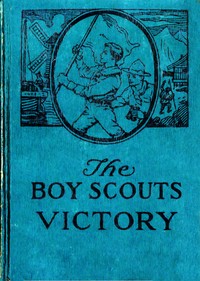
Before opening The Boy Scouts' Victory — Context and Discussion, the edition data offers a quick orientation: 43,836 words, 3 hr 11 min estimated reading time, and 15 detected text sections.
The text analysis averages about 13.4 words per sentence, while the detected sections provide another way to judge how the source is divided.
Project Gutenberg metadata also associates the work with “Boy Scouts -- Juvenile fiction,” connecting these edition facts with the source record’s subject description.
Explore this collection
These alternatives are selected using recorded categories and estimated reading time.
About 190 minutes
Childrens Adventures
43,494 recorded words. 1 minutes difference from this book's estimate.
View Gutenberg source #64694About 194 minutes
Childrens Adventures
44,394 recorded words. 3 minutes difference from this book's estimate.
View Gutenberg source #57466About 194 minutes
Childrens Adventures
44,565 recorded words. 3 minutes difference from this book's estimate.
View Gutenberg source #60941Search stored excerpts and compare books → Choose by your preferences →
Choices use stored catalog measurements. Estimates vary with reading speed. A shared category is a catalog label, not a claim that two books have the same argument or literary quality.
Search reads excerpt text stored with this catalog and links to its associated Gutenberg record. The connection is stored in the site database; this tool does not recheck that every excerpt is word-for-word identical to that external record. Excerpt search does not cover every chapter and does not verify historical publication dates.
Catalog snapshot checked: 2026-09-26. Coverage: 90 public books, 90 available source excerpts.
Calculated from edition completeness, EPUB availability, text structure and catalogue metadata. Not a user rating.
Total of 100 points, scaled to a 2.5-5.0 range. Editions with an empty description or a missing EPUB file are not scored.
Public-domain source text
The source text is kept in the dedicated reader, separate from this catalogue record and its commentary.
The opening chapter of The Boy Scouts' Victory introduces three cadets at a military school: Nickell-Wheelerson, an Englishman determined to join the war in Europe; Morales, a Mexican who feels compelled to stay out; and Zaidos, a Greek who expects his country will eventually fight. Their conversation, set after reveille, centers on personal duty and national identity rather than scout activities. The catalog lists this as a Boy Scouts story, yet the excerpts contain no mention of scouting—only military school and a later romance narrative involving a character named Helen. This discrepancy between the catalog subject and the actual content is the most striking feature of the available text.
The three protagonists frame their war involvement not as patriotic duty but as personal necessity. Nickell-Wheelerson has saved his allowance to book passage to England, overriding his father's wish to keep him safe. He argues that his older brother's death in the trenches compels him to go: “I’m nineteen. There are two little chaps to carry on the name and take care of the title, if the rest of us go.” Morales, by contrast, is told to “keep out of that mess” because Mexico will need him later. Zaidos, the Greek, is predicted to enter the war eventually. The dialogue reveals a hierarchy of national obligations—English sacrifice is urgent, Mexican neutrality is prudent, Greek involvement is inevitable—but all three are presented as equally valid personal choices. The author uses the cadets' differing backgrounds to explore how young men rationalize participation in a global conflict, without endorsing any single position.
Later excerpts shift abruptly to a first-person account by a woman named Helen, who recounts a love affair with an army officer named Ellston Hazelden. Her story includes a quarrel over the color of a dress, which she now regrets: “It commenced with the color of a dress I wore. Tony said it was the most unbecoming thing I had ever had on.” This domestic conflict contrasts sharply with the war talk of the opening chapter. Helen's narrative is framed as a confession to Zaidos, who listens with fascination, having himself been “crazy over” a girl he cannot name. The romance subplot appears to be a separate thread, possibly connected to the main characters through Zaidos. The catalog subject “World War, 1914-1918 -- War work -- Red Cross” may relate to this section, but the excerpts do not show any Red Cross activity. The love story seems to serve as a personal counterpoint to the war, emphasizing that private emotions persist even in times of global crisis.
The Project Gutenberg record assigns three subject headings: Boy Scouts fiction, World War campaigns in Turkey, and Red Cross war work. None of these are evident in the excerpts. The Boy Scouts are absent from the text; the military school setting and the characters' discussions of joining the war suggest a different kind of youth organization. The Turkish campaign is not mentioned, and the Red Cross appears only as a secondary topic. The romance subplot and the characters' national backgrounds—English, Mexican, Greek—are not reflected in the catalog. This mismatch suggests that the catalog subjects may have been assigned based on the book's title and publication era rather than its actual content. Readers expecting a scouting adventure will find instead a story about military school cadets debating personal duty, with a romantic interlude. The excerpts offer no evidence of scoutcraft, battlefield action, or humanitarian service.
Because the excerpts cover only the first chapter and a later romance section, the overall structure of The Boy Scouts' Victory remains unclear. The title suggests a scouting theme, but the available text does not support it. Readers should approach the book without assuming it matches its catalog description. Pay attention to how the three national perspectives develop and whether the romance plot eventually connects to the war narrative. The author, George Durston, appears more interested in personal motives than in adventure or historical detail.
I found myself thinking about The Boy Scouts' Victory the other day, and how its grand war debates felt almost beside the point, leaving me with a quieter ache for the friends themselves. That same wistfulness crept back when I remembered The Youngest Camel — Story, Setting & Ideas, another story where the journey matters less than the company kept along the way.
Create a short personal record of your experience with this book.