About 203 minutes
Boy Scout Explorers at Emerald Valley — Story, Setting & Ideas
Childrens Adventures
46,640 recorded words. 3 minutes difference from this book's estimate.
View Gutenberg source #63506
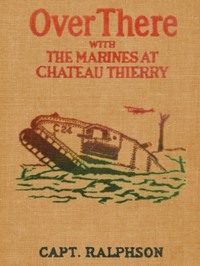
Before opening Over There with the Marines at Chateau Thierry — Inside the Classic, the edition data offers a quick orientation: 47,302 words, 3 hr 26 min estimated reading time, and 44 detected text sections.
The text analysis averages about 21.1 words per sentence, while the detected sections provide another way to judge how the source is divided.
Project Gutenberg metadata also associates the work with “World War, 1914-1918 -- Campaigns -- France -- Juvenile fiction,” connecting these edition facts with the source record’s subject description.
Explore this collection
These alternatives are selected using recorded categories and estimated reading time.
About 203 minutes
Childrens Adventures
46,640 recorded words. 3 minutes difference from this book's estimate.
View Gutenberg source #63506About 210 minutes
Childrens Adventures
48,292 recorded words. 4 minutes difference from this book's estimate.
View Gutenberg source #59354About 196 minutes
Childrens Adventures
44,879 recorded words. 10 minutes difference from this book's estimate.
View Gutenberg source #62989Search stored excerpts and compare books → Choose by your preferences →
Choices use stored catalog measurements. Estimates vary with reading speed. A shared category is a catalog label, not a claim that two books have the same argument or literary quality.
Search reads excerpt text stored with this catalog and links to its associated Gutenberg record. The connection is stored in the site database; this tool does not recheck that every excerpt is word-for-word identical to that external record. Excerpt search does not cover every chapter and does not verify historical publication dates.
Catalog snapshot checked: 2026-09-26. Coverage: 90 public books, 90 available source excerpts.
Calculated from edition completeness, EPUB availability, text structure and catalogue metadata. Not a user rating.
Total of 100 points, scaled to a 2.5-5.0 range. Editions with an empty description or a missing EPUB file are not scored.
Public-domain source text
The source text is kept in the dedicated reader, separate from this catalogue record and its commentary.
The novel begins not with a battle but with a sensory dislocation: Top Sergeant Phil Speed does not know exactly where he is, and the reader shares his uncertainty. The opening paragraph emphasizes noise—cheering, truck rumble, gun roar—and a bodily detail, calloused throats, that grounds the story in physical experience. This focus on the protagonist's immediate sensations, rather than strategic overview, signals that the narrative will follow Phil's personal perspective through the chaos of war.
The first chapter establishes Phil Speed's distinctive voice through his banter with Tim. When Phil says he expects to feel like a coward before a fight but then imagine he can "lick the whole boche army single-handed," the dialogue reveals a self-deprecating humor that undercuts heroic posturing. The mention of an empty stomach as a measure of time—"I should judge from the feeling of my empty stomach that it's almost breakfast time"—ties his mental state to mundane physical needs. This blend of bravado and bodily reality recurs throughout the excerpts and shapes the reader's expectation that Phil's adventures will be filtered through a fallible, human consciousness.
Chapter XXIII shows Phil voluntarily returning to the prison he just escaped, because he forgot to take ammunition. This decision—risking recapture for a practical oversight—creates a pattern of action driven by small, concrete goals rather than grand strategy. The cellar fight that follows, with a spade as weapon and starlight as the only illumination, emphasizes close-quarters confusion. The reader learns to expect that Phil's plans will be interrupted by unforeseen violence, and that his resourcefulness will be tested in tight, dark spaces. The chapter titles themselves, such as "A Barbed Wire Prison" and "The Fight in the Cellar," reinforce this focus on immediate physical predicaments.
Throughout the excerpts, specific sensory details—hunger, darkness, noise—serve as markers for the narrative's rhythm. In the opening, the Marines' calloused throats and the "gun-roar" of the front establish a world of constant auditory pressure. In the later excerpt, Phil's return to the cellar is guided by touch and memory: he is "not exactly certain" whether the guard has rolled away, and the blow comes without warning. The candles have been snuffed out, leaving only starlight from a window. These details do more than set atmosphere; they cue the reader to attend to what Phil can perceive moment by moment, making the story's tension hinge on limited information.
The provided excerpts do not reveal how Phil's mission concludes, nor do they clarify the larger strategic situation at Château-Thierry. The reader sees only fragments: a tunnel escape, a forgotten ammunition pouch, a fight in a cellar. The novel's full arc—whether Phil reunites with Tim, whether the Marines achieve their objective—remains unknown from these passages alone. This incompleteness is itself a guide: the excerpts suggest that the book prioritizes immediate, small-scale action over historical sweep. A first-time reader should expect a series of tight, episodic encounters rather than a continuous battle narrative, and should follow Phil's physical sensations as clues to his changing circumstances.
Reading the excerpts sequentially reveals a story built from discrete, sensory-heavy scenes rather than from a panoramic view of war. Phil Speed's voice—self-mocking, hungry, alert—anchors each episode in a recognizable human response. The pattern of capture, escape, and voluntary return suggests that the novel's engine is not merely survival but the protagonist's persistent, sometimes foolish, initiative. For a first reading, attending to what Phil notices (or fails to notice) will likely yield more insight than trying to reconstruct the battle of Château-Thierry from the text.
I remember how Ralphson’s Over There taught me that war is mostly waiting and hunger, not glory. It left a certain ache. So it was a quiet comfort, later, to find that same patient, watchful spirit in Boy Scout Explorers at Emerald Valley — Story, Setting & Ideas, where the wilderness asks for the same steady courage, just with birdsong instead of shells.
Create a short personal record of your experience with this book.