About 159 minutes
The Oxbow Wizard — Story, Setting & Ideas
Childrens Adventures
36,402 recorded words. 6 minutes difference from this book's estimate.
View Gutenberg source #61911
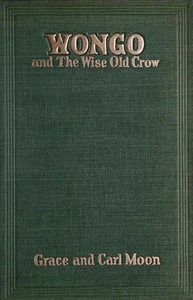
This digital edition of Wongo and the Wise Old Crow — Themes and Context is described by source-level measurements including 35,031 words, 2 hr 33 min estimated reading time, and 16 detected text sections.
The text analysis averages about 21.0 words per sentence, while the detected sections provide another way to judge how the source is divided.
Project Gutenberg metadata also associates the work with “Animals -- Juvenile fiction,” connecting these edition facts with the source record’s subject description.
Explore this collection
These alternatives are selected using recorded categories and estimated reading time.
About 159 minutes
Childrens Adventures
36,402 recorded words. 6 minutes difference from this book's estimate.
View Gutenberg source #61911About 147 minutes
Childrens Adventures
33,773 recorded words. 6 minutes difference from this book's estimate.
View Gutenberg source #68698About 142 minutes
Childrens Adventures
32,574 recorded words. 11 minutes difference from this book's estimate.
View Gutenberg source #69064Search stored excerpts and compare books → Choose by your preferences →
Choices use stored catalog measurements. Estimates vary with reading speed. A shared category is a catalog label, not a claim that two books have the same argument or literary quality.
Search reads excerpt text stored with this catalog and links to its associated Gutenberg record. The connection is stored in the site database; this tool does not recheck that every excerpt is word-for-word identical to that external record. Excerpt search does not cover every chapter and does not verify historical publication dates.
Catalog snapshot checked: 2026-09-26. Coverage: 90 public books, 90 available source excerpts.
Calculated from edition completeness, EPUB availability, text structure and catalogue metadata. Not a user rating.
Total of 100 points, scaled to a 2.5-5.0 range. Editions with an empty description or a missing EPUB file are not scored.
Public-domain source text
The source text is kept in the dedicated reader, separate from this catalogue record and its commentary.
The opening chapter of Wongo and the Wise Old Crow introduces a talking bluejay who taunts Wongo, a little brown bear, with the proverb “The early bird catches the worm.” Wongo’s grumpy retort—that the worm “ought to get caught” for getting up early—establishes a voice that is both playful and stubborn. The setting, Timbertangle, is a mountain region with caves, jack-oak bushes, and a dawn-lit sky, but the narrative quickly moves beyond scenery into a social world where animals converse, plot, and enforce laws. The catalog subjects list “Animals -- Juvenile fiction” and “Indians of North America -- Juvenile fiction,” yet the excerpts show that the animal characters operate under a legal system: Cho-gay, the Indian boy ruler, imprisons a fox for “twice breaking the law” and schedules the release of a mountain sheep. This is not a simple wild-animal story but one with governance, punishment, and alliances.
The excerpts reveal that Timbertangle is not a lawless wilderness. Cho-gay, described as an “Indian boy-ruler,” holds authority over animals: he imprisons a fox and a mountain sheep, and he sets a release date for the sheep. Kaw the crow acts as an advisor, and Wongo follows his instructions to hunt a specific sheep—only to accidentally kill the very one Cho-gay had confined. This incident suggests a system of justice and perhaps unintended consequences. The catalog subject “Indians of North America -- Juvenile fiction” might lead readers to expect cultural or historical content, but the excerpts show Cho-gay as a ruler within a fantasy animal society, not a depiction of Indigenous life. The laws are enforced by a human child, yet animals like Kaw and Wongo participate in governance through dialogue and action.
The dialogue in the excerpts is marked by a dry, sometimes sarcastic tone. When Wongo reports catching a sheep, Kaw laughs “long and hard” because Wongo had actually killed the sheep Cho-gay had imprisoned. Kaw’s response—“Well, it looks that way to me”—is understated and sly. The bluejay’s taunt and Wongo’s grumpy reply also show humor rooted in character. The crow sings a song about a wolf and a bobcat fighting, with lines like “Mr. Wolf he ran away, / With a scratched-up nose and a bunged-up eye.” This folk-song style adds a rhythmic, oral quality. The catalog subject “Animals -- Juvenile fiction” is accurate, but the excerpts show that the animals’ voices are distinct and often witty, not merely anthropomorphic placeholders.
The table of contents divides the book into three parts: “A Daring Plot,” “Cho-gay of Timbertangle,” and “The Thunder Drum.” The excerpts from “A Daring Plot” focus on Wongo and Kaw’s scheme, while “Cho-gay of Timbertangle” introduces a wolf named Rip who plots with Sandy the coyote to free and eat the imprisoned sheep. Rip is described as “greedy” and “licked his great chops” at the thought of mutton. The catalog subjects include “Bears -- Juvenile fiction” and “Crows -- Juvenile fiction,” but the wolf and coyote are central antagonists, and the excerpts do not feature bears or crows as primary threats. The structure suggests a multi-threaded plot with animal politics, a human ruler, and a villainous wolf, which is more complex than the catalog subjects imply.
Readers approaching Wongo and the Wise Old Crow should note that the catalog subjects only hint at its content. The excerpts depict a society with laws, a human child as judge, and animals who scheme, sing, and debate. The humor and voice are specific to this work, not generic. Pay attention to how the narrative balances animal behavior with human governance, and how the wolf Rip operates as a clear antagonist. The book rewards close reading of its dialogue and structure.
Sometimes a book lingers not for its heroes but for its unspoken rules. Wongo reveals how a wild society still needs law, trial, and consequence. I recall the same quiet gravity in North Woods Manhunt (A Sugar Creek Gang Story) — Themes and Context, where boys stumble into justice, not as a lesson, but as a given. Old friends, both of them.
Capture what you thought, learned, and would like to remember.